
When Debra Bainter looks back on the beginning of her breast cancer journey, she doesn’t sugarcoat it. In her own words, she did “everything wrong.” And that’s exactly why she’s sharing her story. She hopes others will learn from her mistakes and take action before fear, denial, or misinformation have a chance to take hold.
The first warning sign seemed easy to explain away. Debra Bainter noticed inflammation in her left breast but assumed it was irritation from her bra while walking several miles each day or perhaps a rash caused by sweating. She didn't think much of it. After all, she rarely got sick, didn't have a primary care provider, and had never considered herself at high risk for breast cancer because there was no family history of the disease.
Looking back, she sees the warning signs clearly.
“I disregarded mammograms and didn’t even have a primary care doctor because I was rarely sick,” she says.
Like many, fear played a major role in her decision to delay seeking medical attention. The possibility of hearing the words “you have cancer” was terrifying. So was the thought of seeing worry and sympathy reflected in the faces of family and friends.
“I’m the kind of person who prayed for and helped people, not have people help me,” she notes.
Those fears were compounded by messages she encountered online. Social media posts promoting alternative treatments and discouraging chemotherapy planted seeds of doubt. Stories warning about side effects made her reluctant to seek answers from medical professionals.
Eventually, however, reality became impossible to ignore.
Her husband could tell something wasn't right. While she had become skilled at hiding how poorly she felt, he saw through it and insisted she go to the Emergency Department at Blessing Hospital. In March, she was admitted for testing and underwent a biopsy.
Deep down, she already suspected the diagnosis.
“I knew in my heart I had breast cancer before my official diagnosis,” she recalls.
Yet when the diagnosis finally came, it wasn't what she expected. Instead of hopelessness, she found a path forward.
Her oncologist, Dr. Mohammed Memon, explained that advances in treatment have dramatically changed outcomes for patients with HER2-positive breast cancer. What may once have been considered a devastating diagnosis decades ago now comes with targeted treatment options that offer hope. Rather than judging her for waiting so long to seek care, he met her with honesty, compassion, and support. That support extended far beyond the physician's office.
At the Blessing Breast Center, Debra has found herself surrounded by a team determined to help her navigate one of the most difficult seasons of her life. She credits breast cancer navigator Jessica Nuebel, along with nurses, infusion staff, schedulers, and physicians, for helping her manage both the practical and emotional challenges of treatment.
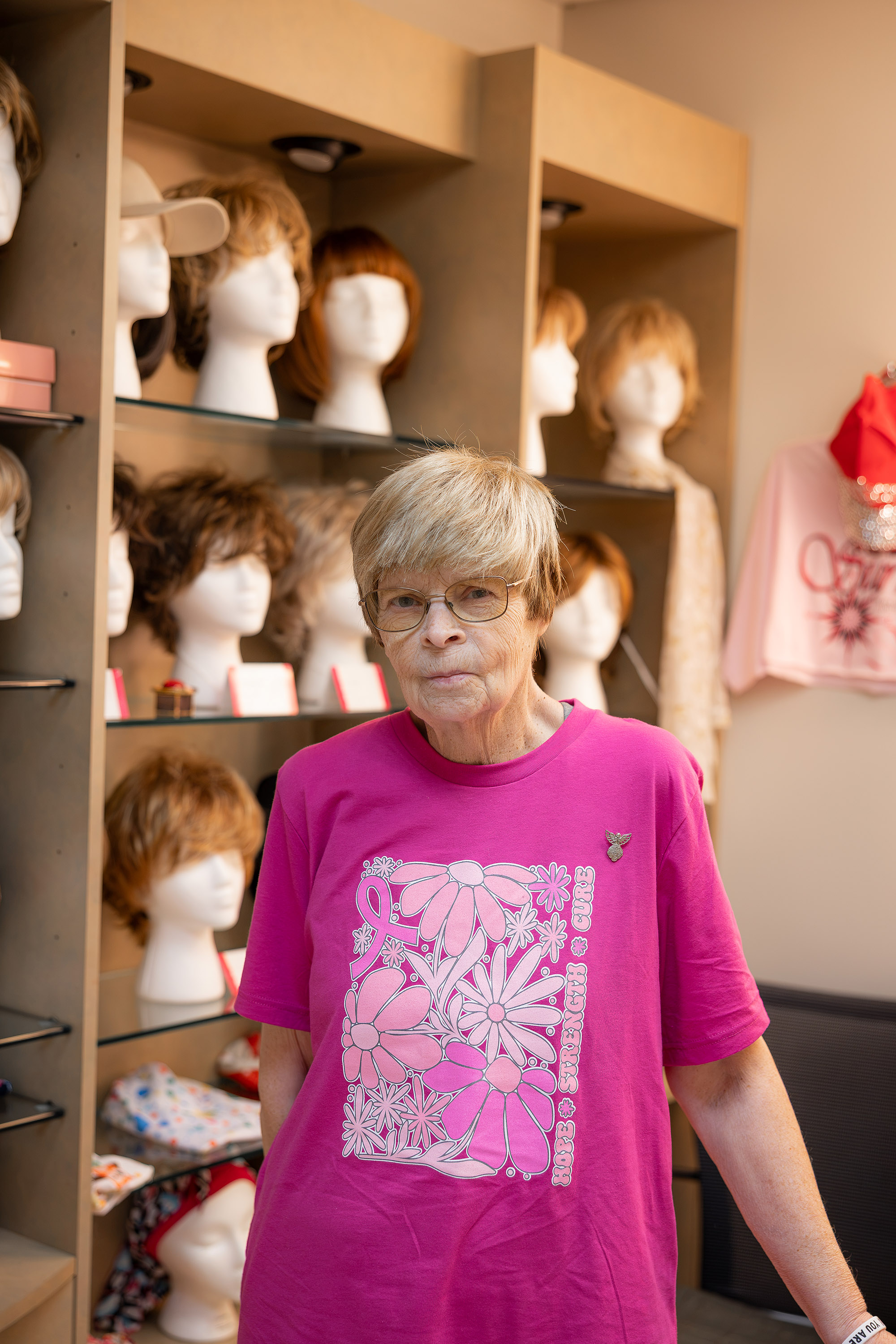
“Everyone is caring, supportive, great listeners, and eager to answer any questions that may come up,” she says.
Treatment has not always been easy. Debra recalls days when she felt miserable following therapy. Cancer also influenced her decision to retire after more than 21 years working at the McDonough County Circuit Clerk’s Office. Yet even in the hardest moments, she found strength in her faith, her family, her church community, and the encouragement of fellow cancer survivors. Messages, cards, prayers, and unexpected acts of kindness reminded her she wasn't facing cancer alone.
The experience has permanently changed her perspective.
Today, she values preventive care, routine screenings, and regular physician visits in a way she never did before. She has learned firsthand that fear does not protect people from cancer. In fact, it often delays the very care that could make the biggest difference.
“Put your fears aside,” she encourages. “There’s more fear in the unknown.”
Now, her message to others is simple, urgent, and deeply personal.
Whether you've noticed a symptom, skipped a mammogram, or convinced yourself that breast cancer couldn't happen to you, don't wait.
“The sooner you get checked out by a doctor, the better,” she says.
If she could rewrite the beginning of her own story, she would schedule the appointment, get the screening, and ask the questions she was once afraid to ask. Since she can't change her own past, she's hoping her experience might change someone else's future.
“It’s important for me to share my story publicly to encourage others not to do everything wrong as I did,” she offers.
If her story inspires even one person to schedule a mammogram, call a doctor, or seek help for a concerning symptom, Debra says it will all have been worth it.
The lesson she wants people to remember is the same one she learned the hard way: Early detection matters. And waiting could cost you the opportunity to act when it matters most.
To schedule a mammogram
When it comes to preventing breast cancer, the best defense is early detection. Our caring staff focuses on catching breast cancer early, helping you minimize your risk. Mammograms are available at Blessing Health Center at 927 Broadway in Quincy, Blessing Health Hannibal, and Illini Community Hospital in Pittsfield. To schedule your appointment at any of these locations, call (217) 223-8400 ext. 4300 or visit blessinghealth.org/breastcenter for more information.