
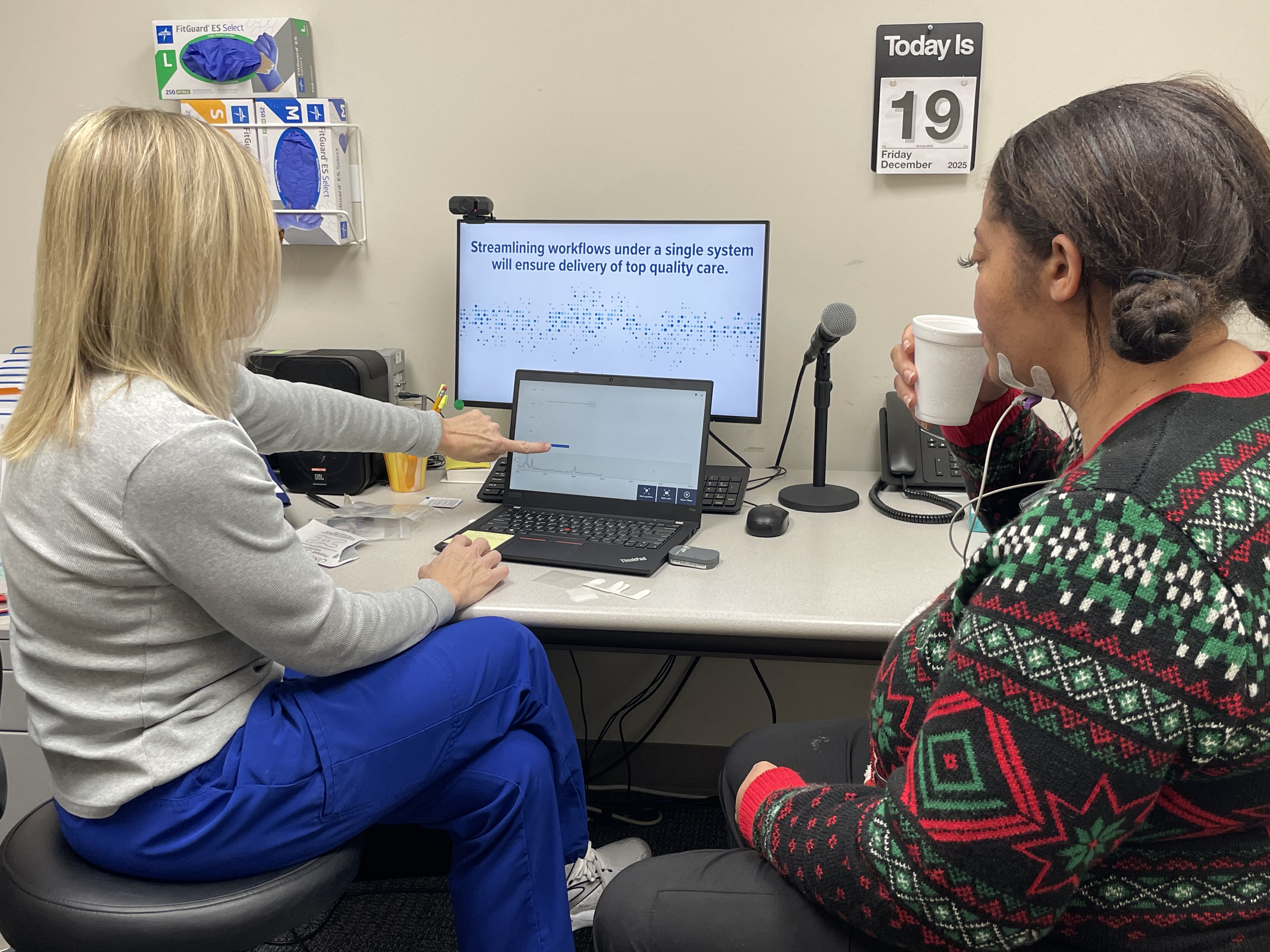
Patients of Blessing Health System’s nationally-accredited physical rehabilitation program now have access to new technology to treat swallowing difficulties that can make eating a normal diet impossible and sometimes dangerous. Funded thanks to a grant from The Blessing Foundation, inpatients and outpatients with a doctor’s order have access to the Synchrony Dysphagia System, an advanced tool that uses “surface electromyography” (sEMG) to help patients and their care providers better understand and improve their swallow function.
Certified speech therapist Becky Spotts says the new technology transforms the experience and outcomes for patients with dysphagia, a swallowing disorder that affects people recovering from stroke or head injury, as well as those with Parkinson’s disease, other progressive neuromuscular conditions, or age‑related muscle weakness.
Before Synchrony, Spotts noted that therapists largely relied on X‑ray swallow studies and their clinical observations to guide treatment. The new system provides real‑time visual feedback, allowing both therapist and patient to see the strength and timing of muscle activity during swallowing exercises.
“When I tell a patient, ‘swallow hard,’ how do they know they’re actually doing it? How do I know?” Spotts explained. “Synchrony gives us that data. We can show them exactly what their muscles are doing, we can see it ourselves, and measure their progress from session to session.”
Making therapy fun
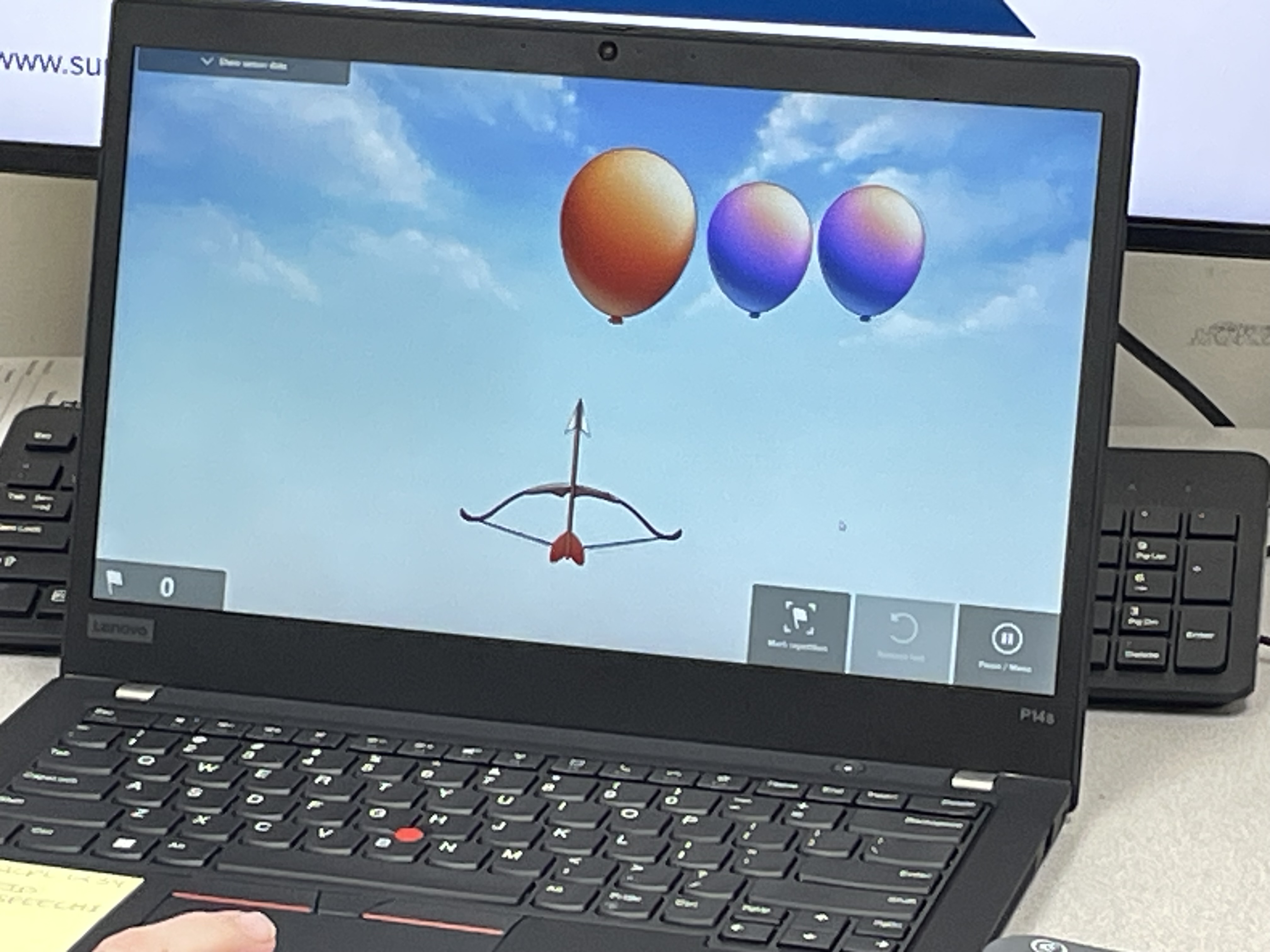
The system sets individualized targets based on a patient’s typical swallow, then challenges them to exceed it. It also features “game-based” exercises that allow patients to have a more visual-based therapy experience. Some of the training screens include interactive elements, like balloons or a kangaroo animation, which help keep patients engaged. Spotts notes that they’re often well received by patients as it makes them feel less like they’re doing therapy.
Spotts says the new system may help shorten recovery time and reduce the need for modifications to diets, a common course of treatment for those grappling with symptoms.
“We’ve already seen patients come off modified diets and go back to regular diets or less restrictive diets,” she said of treatments. “I think the visual feedback keeps them engaged and working harder, and that contributes to better outcomes.”
While patients who recently experienced a stroke often make notable gains, Spotts is encouraged by the system’s potential for individuals with longer‑standing or progressive conditions like Parkinson’s disease.
“There’s good research showing effectiveness even for people whose dysphagia comes later in the course of a disease. It gives hope to people who aren’t newly diagnosed but still want to improve,” she said.
When more help is needed, the new system delivers
Blessing also purchased a second tool from the same manufacturer that helps prime the muscles before moving into exercises measured by the Synchrony system.
Blessing is one of only a few hospitals in the region offering this advanced technology.
“It gives us one more tool in our toolbox,” she said. “These techniques are really cutting‑edge, and it’s nice for us, and our patients, to have them.”
With more precise assessment, measurable progress tracking, and stronger patient engagement, the Synchrony Dysphagia System is positioning Blessing Health System at the forefront of speech therapy innovation, helping reduce complications, improve outcomes, and support patients in returning to safer, more normal eating and drinking.
For more information on Blessing Health System’s Rehabilitation services go to blessinghealth.org/rehab.