
It’s kind of like “Yelp” for people born in the 1930s. But instead of being a way to leave an online review, this is a story about the power of true human connection. It’s what convinced 91-year-old Jim Nauert to have a lifesaving heart procedure recently.
“I’ve been putting this off for a couple of years because I am skittish,” Jim said. “I can’t even watch a medical show on TV. That’s how bad I am.”
Make no mistake. Jim is a Marine Corps veteran who served during the Korean War. His concern wasn’t pain. It’s just that he is an independent spirit.
“Marines don’t feel pain, but I won’t let my wife (a registered nurse) take a splinter out of my finger. I’ll do it myself. If I can’t do it, I don’t want anyone else to do it.”
The procedure Jim needed was a bit more complicated than splinter removal. He had severe aortic stenosis, a narrowing of the aortic valve opening that allows oxygen-rich blood to flow out to the body when the heart beats and then closes to prevent backflow. Because the valve is unable to open completely, the heart muscle works harder, and blood flow is reduced. Symptoms include a heart murmur, shortness of breath and fatigue with activity. In later stages, symptoms also include chest pain, pressure or tightness and fainting.
“The longer you go without treating aortic stenosis, the higher the risk of death,” said Amy Bates, APRN-AGACNP, nurse practitioner, Valve Clinic coordinator, Cardiology.
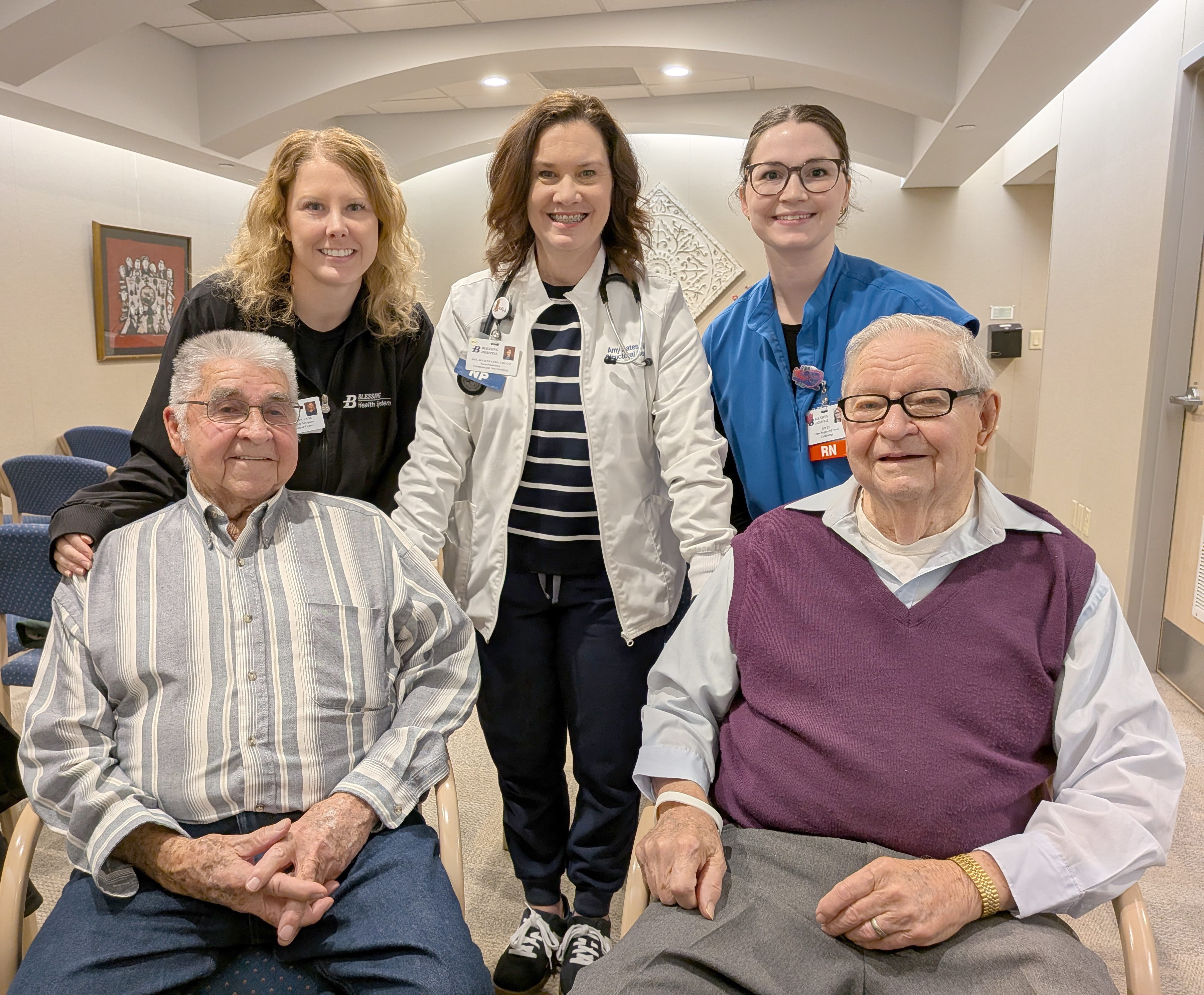
A faulty aortic valve can be replaced through open heart surgery. The procedure involves stopping the heart from beating during valve placement. The other option available at Blessing Hospital is a minimally invasive procedure called TAVR, short for transcatheter aortic valve replacement. This procedure involves placement of a new heart valve via catheter. The new valve is fed through the leg to the heart using X-ray guidance but not requiring opening of the chest and stoppage of the heart. Jim was a candidate for TAVR.
“When they told me I needed this procedure I just said, ‘No, no, no.’ I didn’t want anything to do with it,” he recalled.
“I think Jim was nervous because of his age, questioning if it was something he should go through,” Amy said. “We assured him while open heart surgery was not an option, TAVR was at his age.”
What to do about Jim?
Jim’s family was not about to give up on him. Amy says his daughter reached out to her, asking if there was someone else who could talk to Jim. That’s where 92-year-old Donald Nagel enters the story.
“Donald had just had the TAVR procedure. He was also a veteran and 90-plus years old,” Amy said. “I thought, what better person for Jim to talk to? We asked and Donald said, ‘Sure. I’ll talk to him.’ And it just went from there.”
“I am a positive person,” Donald, a Korean War veteran and Hancock County farmer, exclaimed. “If I can help anybody in any way, I am more than willing to. I thought if I could encourage him to have it done, I would sure try.”
The two men connected by telephone.
“I told him things could not have gone better for me,” Donald continued. “I didn’t have an ache nor a pain during the procedure. The care was good, and I would advise to have it done.”
“He convinced me,” Jim said. “It was his enthusiasm about it – that it went great and he feels good. If it hadn’t been for him, I don’t know that I would have had it done. Death didn’t scare me that much. But I am glad I had the procedure.”
“I can breathe better,” he continued. “I don’t worry. When you’re young, you don’t worry about running around and running out of breath. When you get to be 91 years old, you start to worry about being out of breath. Now, I feel great. I’m really glad I had it done.
“And I am really thankful to Donald,” Jim concluded.
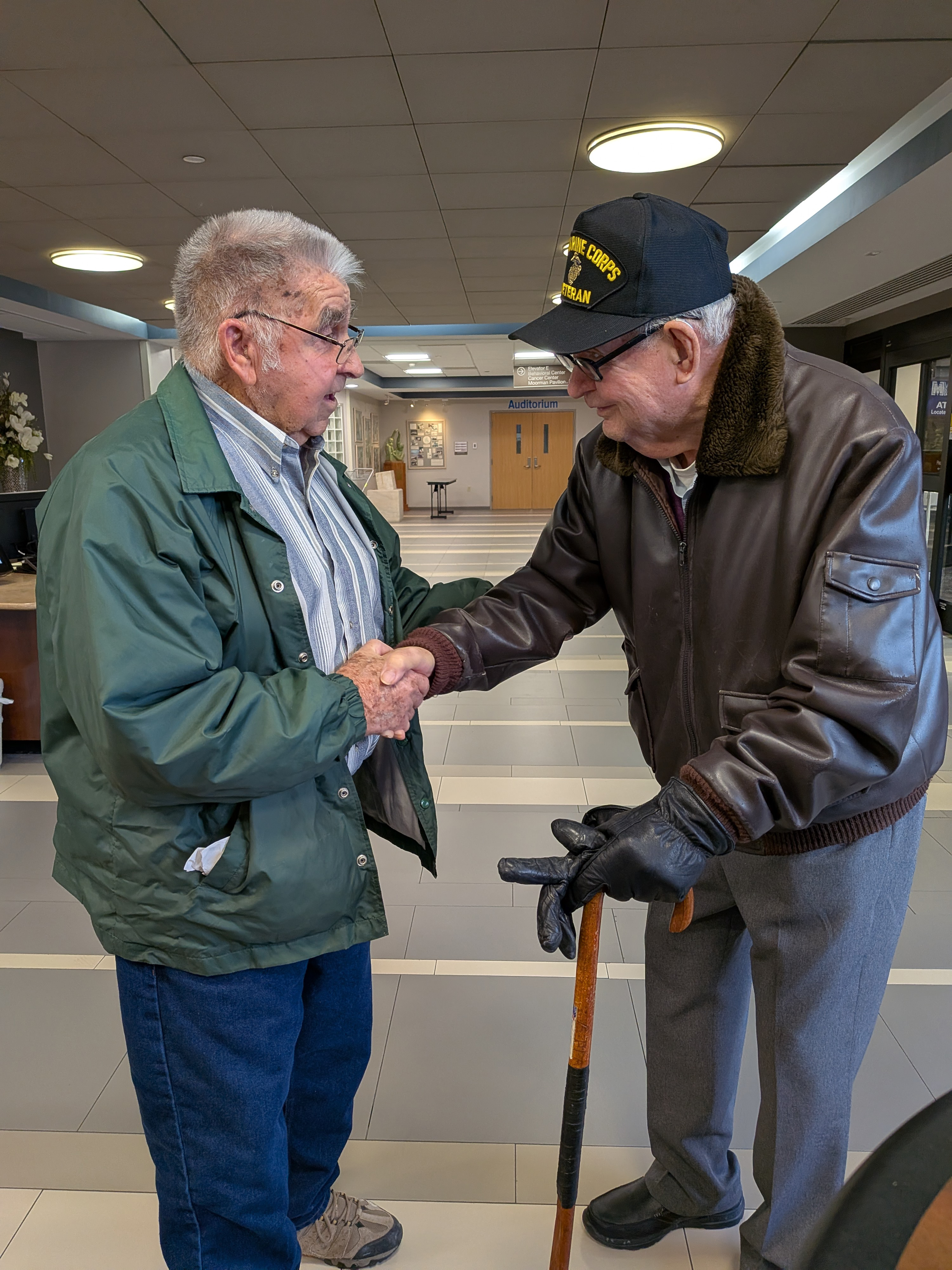
Cardiologist Dr. Jeffrey Cook and heart surgeon Dr. John Arnold led the TAVR team for both Donald’s and Jim’s procedures. For more information about heart care at Blessing Health System, go to blessinghealth.org/heart